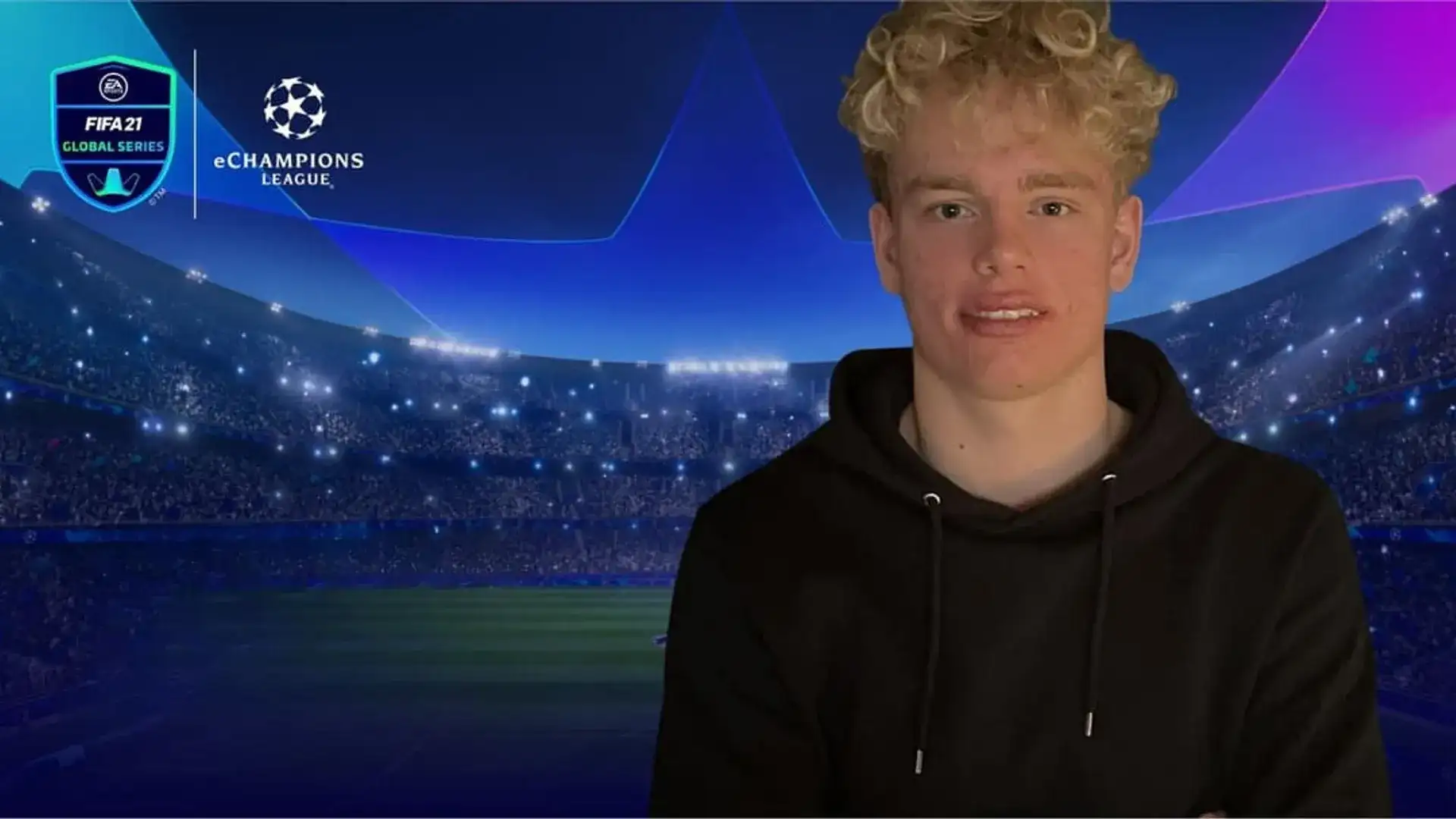
Imagine mastering a football simulation so completely that you become a world champion, only to then step onto a real pitch and earn a call-up to your national team. It sounds like the plot of a video game itself, but for one former FIFA esports champion, this remarkable crossover has become reality. His recent professional debut for his country blurs the lines between the digital and physical realms of football in a way few could have predicted.
From Virtual Glory to Real-World Grass
The journey from esports arenas to international football is, to put it mildly, unconventional. In the world of competitive FIFA—now rebranded as EA SPORTS FC—players hone reflexes, tactical knowledge, and an almost psychic understanding of the game's mechanics. But the physical demands, the pressure of a live crowd, and the unpredictable bounce of a real ball are entirely different beasts. This player's transition suggests that the strategic mind and deep understanding of football cultivated in the virtual space might have more real-world application than we thought. It makes you wonder: what exactly did he bring from the console to the pitch?
Leia também: FURIA conhece adversária na briga por vaga nos playoffs da Pro League 2026
What Does This Crossover Really Mean?
This isn't just a fun novelty act. His debut raises fascinating questions about the future of talent identification and player development. Could esports serve as a legitimate scouting ground for real-world tactical intellect? Professional clubs already use sophisticated data analytics and simulation software; perhaps a generation raised on hyper-realistic football games develops a unique, data-informed football IQ. On the other hand, critics might argue the skills are entirely separate. Mastering button combinations for a perfect through-ball is a world away from executing it with a defender breathing down your neck. Yet, here we are. His story challenges the traditional pathways to becoming a professional athlete and hints at a more fluid future where digital and physical skills aren't so neatly compartmentalized.
I find it particularly compelling because it inverts the usual narrative. We often hear about retired pros moving into punditry or coaching—translating real experience back into analysis. This is the opposite: translating analytical and virtual experience into real performance. It's a testament to his athleticism and dedication to make such a drastic switch. The mental fortitude required to compete at the top level in esports is immense, and perhaps that psychological edge translated directly to handling the pressure of a national team debut.
A New Blueprint or a One-Off Wonder?
Will we see a wave of esports athletes trying to make similar leaps? Probably not in significant numbers—the specific athletic gifts required for professional football are still paramount. However, this case might open doors for a new type of hybrid consultant or analyst within football clubs. Someone who understands the game through the dual lens of data simulation and lived experience. His path is so unique that it's unlikely to become a standard pipeline, but it absolutely shatters preconceived limits. It proves that passion and deep understanding of football can manifest in wildly different, yet surprisingly complementary, ways.
The football world is watching with keen interest. His next steps will be crucial. Can he secure a regular spot? How will his unique background influence his playing style? This story is far from over; in many ways, the real challenge begins now. The debut was the opening chapter of a much larger experiment at the highest level of the sport.
Digging deeper into his training regimen reveals some fascinating adaptations. Sources close to the national team setup mentioned he spent months in specialized conditioning camps, but perhaps more interestingly, he worked with coaches to translate his virtual playbook into physical movement patterns. Think about it: in FIFA, you see the entire pitch from a bird's-eye view. Transitioning to a ground-level perspective where your field of vision is limited must have been a monumental cognitive shift. He reportedly used VR simulations to bridge that gap—practicing real-play scenarios in a virtual space that mimicked a player's actual sightlines. It's a kind of meta-training that feels ripped from a sci-fi novel.
And then there's the tactical side. In an interview with a sports podcast, he once described how playing thousands of hours of FIFA drilled into him the timing of runs, the geometry of passing lanes, and the probability of certain in-game events. "You develop a feel for when a through ball will work, not just because the animation looks right, but because you've seen that exact situation play out a hundred times," he explained. This data-saturated intuition is what modern coaches crave. While a traditional academy graduate might play by instinct forged on muddy pitches, his instinct is layered with algorithmic patterns. It's a different kind of football intelligence, one born from repetition in a controlled, digital environment.
The Reaction Within the Football Ecosystem
Unsurprisingly, the reaction from the football old guard has been mixed. I spoke to a retired defender with over 300 top-flight caps who was, let's say, skeptical. "It's a great story for the media," he grumbled, "but football is played with the heart and the legs, not the thumbs. Let's see how he does on a cold Tuesday night in a difficult away stadium." It's a classic, almost clichéd critique, but it underscores the cultural hurdle. Football has deep traditions, and a path this unconventional was always going to raise eyebrows.
Conversely, the younger generation of coaches and data analysts are enthralled. A performance analyst for a Premier League club, who asked not to be named, told me this: "We use predictive models all the time. What he represents is a human who has internalized those models. He doesn't just read the data printout; he feels it. For certain positions, especially in midfield where spatial awareness is king, that's potentially revolutionary." This divide in opinion is telling. It's not just about one player's ability; it's a clash between football's romantic past and its data-driven future.
His teammates' perspectives are perhaps the most revealing. Early reports suggested a period of natural curiosity and some light-hearted ribbing. "We asked him to do our Ultimate Team squads," one midfielder joked in a locker room interview. But the tone reportedly shifted after they saw his work ethic and, crucially, his football conversations. He wasn't just a gamer; he could break down their opponent's defensive shape with a whiteboard clarity that impressed the veterans. Earning respect in that inner sanctum is the first real victory, long before any match-winning assist.
Broader Implications for Esports and Athletics
This story sends shockwaves far beyond the touchlines of a football pitch. It fundamentally challenges how we define "sport" and "athlete." For years, the debate raged over whether esports professionals were real athletes. This individual didn't just argue for inclusion; he sidestepped the debate entirely by becoming a dual-domain champion. What does that say about the transferable skills? Strategic planning, stress management under scrutiny, rapid decision-making, and team coordination—these are the bedrocks of both endeavors.
Could this inspire other sports? Imagine a champion Formula 1 sim-racer getting a test drive with a real team. Their understanding of racing lines, tire wear simulation, and telemetry data is already incredibly advanced. Or a top-tier basketball simulation player moving into a coaching or analytical role. The barrier, of course, remains the immense physical component. Football, with its clear cognitive and strategic layer, might be uniquely positioned for this crossover, but the principle stands: deep, simulation-based expertise has tangible value.
I believe the most significant impact might be on youth development. Kids today grow up with a controller in one hand and a ball at their feet. Previously, these were seen as competing interests. Now, there's a tantalizing narrative that time spent mastering the virtual game isn't necessarily time wasted from the real one—it might be cultivating a different dimension of understanding. Coaches might start looking at the talented FIFA player in their youth squad not as a distraction, but as a potential tactical prodigy with a uniquely trained brain.
The commercial and sponsorship landscape is already reacting. Brands that straddle gaming and sports are seeing a golden opportunity. His jersey sales, particularly with custom gamer-related patches, are apparently through the roof. It's created a new fan crossover, drawing esports audiences to watch real football and vice-versa. This demographic bleed is a marketer's dream. Suddenly, a national team match is must-watch content for millions who might never have tuned in before.
So, where does this leave us? In uncharted territory, honestly. Every training session, every minute he gets on the pitch, is a data point in a grand experiment. The pressure on him is immense—he's carrying the hopes of two very different, yet now interconnected, worlds. One poor touch will have the traditionalists saying "I told you so." One moment of genius will have futurists declaring a new dawn. The truth, as always, will lie somewhere in the messy middle. His continued presence, whether as a squad player or a starter, will force a permanent reevaluation of talent, training, and what it means to truly know the beautiful game. The next match can't come soon enough.
Fonte: Dexerto